
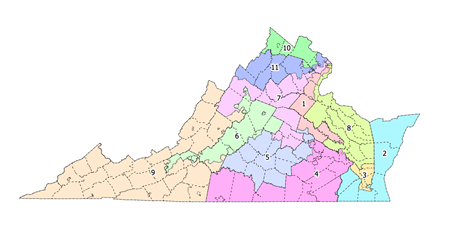
Virginia Democrats have unveiled a new congressional redistricting plan that would create a map with 10 districts favoring Democrats and just one favoring Republicans by leveraging population centers in Northern Virginia and Richmond. This represents a dramatic reshaping of the delegation and a clear attempt to reduce Republican representation. The plan has drawn sharp GOP criticism as overly partisan and faces ongoing legal challenges. If Democrats prevail in the courts, voters would be set to decide in an April referendum whether to allow the map to move forward. Read More.
AxIndex, Edition 3
SNAPSHOT
Our Top 3:
1) Turnout, Not Territory, Dominates Early 2026 Signals: Recent special elections, most notably in Texas, are underscoring a shift in how early-cycle strength is being measured. Low-salience contests are increasingly decided by enthusiasm and base turnout, not persuasion, with Democrats pointing to overperformance as a sign of momentum and Republicans quietly flagging turnout drop-off and runoff fatigue as growing risks.
2) Redistricting Whack-a-Mole Continues in 2026: Redistricting is no longer a background legal issue but an active 2026 battleground. With the Supreme Court allowing California’s revised congressional map to proceed and new efforts unfolding in Virginia, New York, and Maryland, control of House lines is once again shaping the near-term political landscape.
3) Senate Races Begin to Nationalize Through Primaries and Fundraising: Early Senate races in Texas and Georgia are increasingly framed through national lenses, driven by intraparty competition, endorsement uncertainty, and early fundraising gaps. Prolonged Republican primaries are emerging as a potential vulnerability as Democrats work to consolidate earlier around general-election messaging.
National Sentiment Tracking
ECONOMIC SENTIMENT REMAINS A DRAG ONE YEAR INTO TRUMP’S SECOND TERM
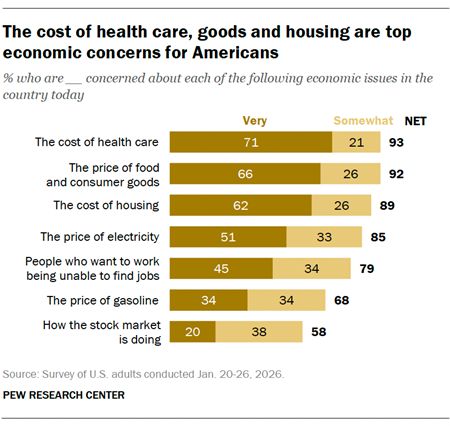
A new Pew Research Center survey finds that Americans continue to hold broadly negative views of the economy one year into President Trump’s second term. Roughly seven in ten adults rate economic conditions as only fair or poor, with concerns driven primarily by the rising cost of everyday necessities like food, housing, and health care. While Republicans are significantly more likely than Democrats to view the economy positively, overall pessimism remains widespread, and expectations for the future are mixed. Notably, a majority of voters oppose major tariff increases, signaling skepticism toward trade policies that could further raise consumer prices.
HOUSE HIGHLIGHTS
PROGRESSIVE CANDIDATE WINS NJ-11 DEM PRIMARY
In New Jersey’s 11th Congressional District special Democratic primary, progressive activist Analilia Mejia has emerged victorious, with former Rep. Tom Malinowski conceding after a close contest. Mejia, backed by prominent progressives including Sen. Bernie Sanders and Rep. Alexandria Ocasio-Cortez, prevailed in a crowded field to replace Gov. Mikie Sherrill and will now face Republican Joe Hathaway in the April 16 special general election. Read More.
Polling At A Glance
Polling:
RCP Average Generic Ballot: 47.7 Dem - 42.5 GOP (D +5.2)
On this day in:
2022: 47.2 GOP - 43.6 Dem (R+3.6)
2018: 45.1 Dem - 38.4 GOP (D+6.7)
Retirements
Notable retirements from Congress are beginning to come out as the election year gets underway. The current total sits at 51 incumbent members (21 Democrats / 30 Republicans) of the House who have announced they are not seeking re-election.
For context, during the first Trump term, there were 52 retirements from the House.
CONGRESSIONAL RETIREMENTS HIT HIGHEST LEVEL IN DECADE
A record number of U.S. lawmakers are choosing not to seek re-election or are stepping down early as the 2026 midterms approach. As of early February, at least 60 members of Congress, including 51 House members and nine senators, have announced they won’t run again, a level of turnover that outpaces prior cycles and marks the most retirements this century at this point in the calendar.
The wave of departures is reshaping the electoral landscape by creating more open, competitive seats. The trend is especially consequential for Republicans, given their narrow House majority, while Democratic exits point to generational turnover and the end of long tenures, collectively signaling internal pressures and raising the stakes in the fight for control of Congress. Read More.
GEORGIA GOP REP. LOUDERMILK TO RETIRE
Georgia Republican Rep. Barry Loudermilk announced he will not seek re-election in 2026, adding another House seat to the growing wave of retirements ahead of the midterms. A five-term member and Trump ally, Loudermilk’s exit opens Georgia’s 11th District, a solid GOP seat, to a competitive nomination and adds to the churn reshaping the House field. Read More.
NV-02 REP. AMODEI (R) TO RETIRE
Nevada Republican Rep. Mark Amodei announced he will not seek re-election in 2026, opening up the state’s 2nd Congressional District and adding to the number of Republicans leaving Congress. Amodei’s departure makes NV-02, a reliably Republican seat, an open contest, drawing interest from multiple GOP contenders while Democrats assess long-shot opportunities in the state's lone Republican district. Read More.
Redistricting
VIRGINIA DEMOCRATS SEEK TO MAKE GAINS WITH PROPOSED HOUSE MAP
SUPREME COURT GREENLIGHTS NEW CALIFORNIA MAP
The U.S. Supreme Court, in an unsigned order, allowed California’s revised congressional map to take effect, rejecting challenges from Republican voters who argued the plan diluted their influence. The ruling clears the way for Democrats to use the new map in 2026, a move expected to make several districts more competitive and potentially put long-held Republican seats in play. Read More.
SENATE HIGHLIGHTS
Retirements
So far, 9 Senators have announced their retirement from the chamber at the end of the current Congress.
SUSAN COLLINS OFFICIALLY ENTERS 2026 SENATE RACE
Republican Sen. Susan Collins announced she is running for a sixth term in the U.S. Senate, launching what is expected to be one of the most closely watched and competitive Senate contests of 2026. Collins, a longtime centrist lawmaker in a state that leans Democratic in presidential elections, is framing her campaign around experience and bipartisan problem-solving, even as she faces criticism over immigration enforcement and mounting challenges from Democrats including Gov. Janet Mills and progressive candidate Graham Platner. Read More.
DEMOCRATS HAVE THE FUNDRAISING EDGE IN KEY SENATE RACESSUSAN COLLINS OFFICIALLY ENTERS 2026 SENATE RACE
New FEC filings show Democratic Senate candidates holding an early fundraising edge over Republicans in several marquee 2026 battleground contests, including Georgia, North Carolina, Ohio, and New Hampshire, as the fight for control of the chamber takes shape. In Georgia, incumbent Sen. Jon Ossoff reported a substantial haul that dwarfs his GOP rivals, and Democratic contenders in open and competitive states are also pulling in larger sums, a dynamic that could bolster both defensive and offensive Senate strategies heading into the midterms. Read More.
Paxton, Crockett Ahead in Polling Heading into Primary Season
New polling in Texas underscores continued volatility in both parties’ U.S. Senate primaries. On the Republican side, Attorney General Ken Paxton holds an early edge over Sen. John Cornyn, with no candidate on track to clear 50% and a runoff increasingly likely. Democrats face a similarly competitive contest between Reps. Jasmine Crockett and James Talarico, setting up a nomination fight that could shape messaging, resources, and turnout dynamics well ahead of the general election. Read More.
Polling At A Glance
Recent Polls
The Alabama Poll (AL GOP Primary): Marshall 26, Moore 17, Hudson 8, Walker 4, Murphy 1
JL Partners (TX GOP Primary): Paxton 27, Cornyn 26, Hunt 26
University of Houston (TX GOP Primary): Paxton 38, Cornyn 31, Hunt 17
JL Partners (TX GOP Primary Runoff): Paxton 41, Cornyn 40
University of Houston (TX GOP Primary Runoff): Paxton 51, Cornyn 40
JL Partners (TX GOP Primary Runoff): Hunt 44, Paxton 34
University of Houston (TX Primary Runoff): Paxton 56, Hunt 33
JL Partners (TX GOP Primary Runoff): Hunt 44, Cornyn 33
University of Houston (TX GOP Primary Runoff): Cornyn 46, Hunt 39
University of Houston (TX Dem Primary): Crockett 47, Talarico 39, Hassan 2
University of Houston (TX General): Paxton 45, Crockett 43, Brown 4
University of Houston (TX General): Paxton 46, Talarico 44, Brown 3
University of Houston (TX General): Cornyn 45, Crockett 43, Brown 5
University of Houston (TX General): Cornyn 44, Talarico 43, Brown 5
University of Houston (TX General): Hunt 46, Crockett 43, Brown 3
University of Houston (TX General): Hunt 46, Talarico 42, Brown 3
Quantus (KY GOP Primary): Barr 28, Cameron 27, Morris 17
Emerson (KY GOP Primary): Barr 24, Cameron 21, Morris 14
Emerson (KY Dem Primary): Booker 30, McGrath 19, Stevenson 4, Forsythe 1
IN THE STATES
DEMOCRAT FLIPS GOP STATE SENATE SEAT IN TEXAS
In a major special election upset, Democrat Taylor Rehmet defeated Republican Leigh Wambsganss in Texas State Senate District 9, a reliably Republican seat in Tarrant County that President Trump carried by 17 points in 2024. Rehmet won the January 31 runoff by about 57%–43%, an outcome Democrats are calling a wake-up call and a signal of competitive energy in conservative territory ahead of November’s midterms.
Read More.
On SiriusXM POTUS, AxAdvocacy President Ashlee Rich Stephenson unpacked the lessons from the Texas special runoff and explained what the upset means for Republicans navigating a high-stakes 2026 cycle.
EMERGING NARRATIVES
PROGRESSIVE CANDIDATE WINS NJ-11 DEM PRIMARY
In New Jersey’s 11th Congressional District special Democratic primary, progressive activist Analilia Mejia has emerged victorious, with former Rep. Tom Malinowski conceding after a close contest. Mejia, backed by prominent progressives including Sen. Bernie Sanders and Rep. Alexandria Ocasio-Cortez, prevailed in a crowded field to replace Gov. Mikie Sherrill and will now face Republican Joe Hathaway in the April 16 special general election. Read More.
ON THE HORIZON
Upcoming Elections:
March 3:
Arkansas, North Carolina, Texas
March 10:
Mississippi
March 17:
Illinois
March 31:
Arkansas Runoff
April 16:
NJ-11 Special General
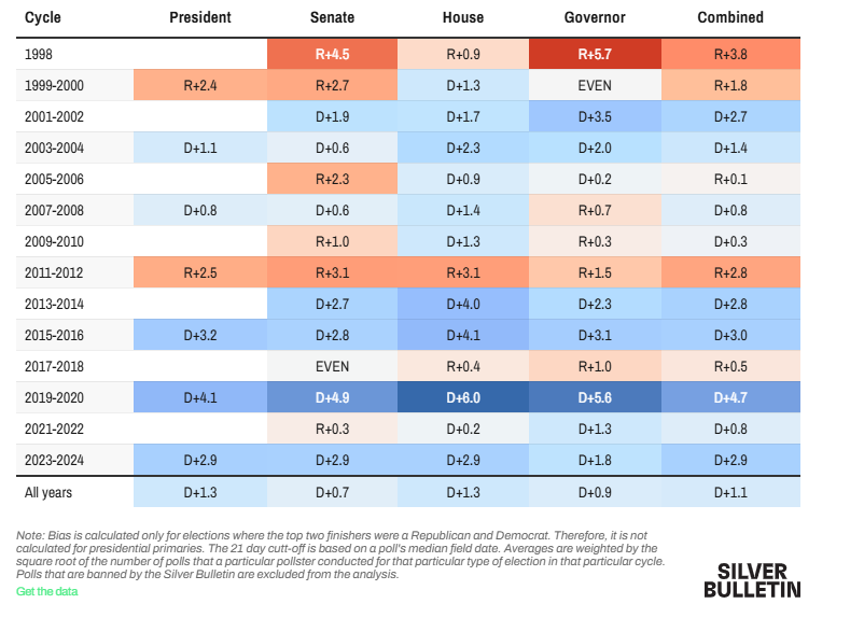
Polling Error Is the Wild Card Heading Into November With four weeks until Election Day, Democrats are enjoying some of the most favorable polling they have seen in years. The question for anyone planning around November's results is a simple one: are the polls right? Recent history says that is far from guaranteed. In each of the last three election cycles, polls have missed in the same direction, and that direction has been toward Democrats. Three cycles, one direction Nate Silver's Silver Bulletin tracks the average statistical bias in polls taken during the final three weeks of each election cycle. The pattern since 2019 is hard to miss: • 2019-2020: polls overstated Democrats by 4.7 points across all offices • 2021-2022: polls overstated Democrats by 0.8 points • 2023-2024: polls overstated Democrats by 2.9 points Averaged together, that is a 2.8-point miss in Democrats' favor.
The Post-Recess Congressional Outlook Congress returned from its five-week August recess and sent a bill to the President to fund the government through December 11, but the major fiscal and policy fights remain unresolved. That makes the CR a ceasefire, not a resolution — the fight over spending and policy is still ahead. The Clock The calendar is shrinking by the week. The House returned August 31, then canceled its remaining two full work weeks in September, leaving a single four-day session (September 14-17) before members leave for the campaign trail. The Senate has a bit more time, scheduled to stay in session through October 2. The September 30 fiscal-year deadline is no longer the immediate deadline because the CR extends funding through December 11. Neither chamber has the runway to finish the remaining major legislative agenda items before Election Day. The likely outcome is that decisions on government funding beyond December 11, the FY27 National Defense Authorization Act, and the fate of a third reconciliation package extend into the lame-duck session - decided by a Congress that may look different than the one sitting today. Appropriations & NDAA Appropriations and NDAA are traditional must-pass priorities. Reconciliation is optional. Appropriations remain the most immediate pressure point, and the December 11 deadline only buys time on the FY27 spending bills. All twelve have cleared the House Appropriations Committee, but only three have passed the full floor, and the Senate hasn't reported a single one out of committee. That disparity reflects the two chambers' unresolved fight over topline defense and non-defense spending levels. Absent a herculean effort by the leadership of the House and Senate Appropriations Committees, passing any of the outstanding bills across both chambers by year's end is unlikely, and another stopgap will likely be necessary. After six decades of annual enactment, the odds are in favor of Congress ultimately producing an NDAA. The House passed its version in July by a narrow margin, authorizing roughly $250 billion more in defense spending than FY26 levels. The Senate's version is still pending, stalled since a failed July cloture vote, and even once it passes, a conference committee still has to reconcile the two chambers' different versions before anything reaches the President's desk. NDAA hasn't been signed into law before December in any of the last several cycles; last year's version wasn't signed until December 18, and this year is tracking the same way. With no official Senate passed product, the two chambers will begin informal conference discussions in earnest after the Congress officially breaks for the election season. Reconciliation 3.0 Reconciliation is the one item on this list Congress does not have to touch. Republicans already used the process once this year, passing a second reconciliation bill in June that provided roughly $70 billion in funding for ICE and CBP. A third package, built around Iran war funding, agricultural aid, and provisions tied to Republicans' election-law priorities, cleared the House in July, but the Senate has not advanced it. Majority Leader Thune has said he'd rather hold the framework in reserve as leverage for the funding fight than spend it on a standalone package before the election. Its prospects are likely to depend in significant part on how the funding negotiations develop as well as the election outcome. If one or both Chambers flip, look for Republicans to revisit reconciliation efforts as a last-ditch effort to provide funding to the Administration for key priorities prior to the new Congress. What the Election Changes The election will determine how much leverage each side has during the lame-duck period. With the election on November 3 and the CR expiring December 11, the lame-duck Congress would have roughly five weeks to resolve the next round of government funding. If Republicans retain both chambers, they can continue pursuing their legislative agenda, but the incentive to complete major priorities before the new Congress takes office would still depend on the size of their margins and the remaining legislative calendar. If Democrats win either chamber, the outgoing GOP majority faces greater pressure to resolve outstanding priorities before the new Congress takes office, when the balance of power could shift. That could create a final push to lock in NDAA authorization levels and take another run at reconciliation before new members take office in January. The Bottom Line The next sixty days matter more than the usual pre-election lull suggests. The major open questions: the FY27 spending bills, NDAA authorization levels, and whether Republicans pursue a third reconciliation bill, remain unresolved. Organizations with a stake in any of these three fights have a narrower window than usual to get specific asks attached before that happens, and that window closes well before Congress reconvenes in January.
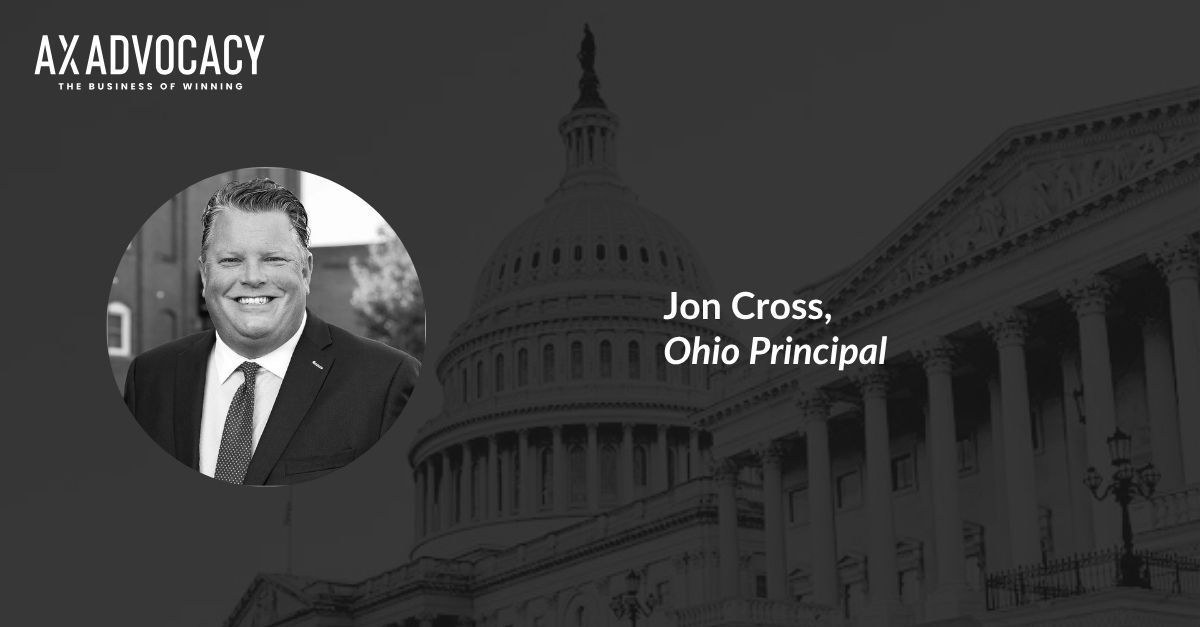
AxAdvocacy Expands to Ohio with Addition of Former State Representative Jon Cross as Principal Firm’s Columbus practice marks its latest expansion into key state capitals

Public Affairs Has a Performance Problem There is a hard truth our industry doesn't like to admit. Public affairs has become far too comfortable confusing activity with accomplishment. Too many firms celebrate meetings instead of momentum. They count bill introductions instead of policy victories. They send clients long recaps filled with updates everyone could have read themselves and call it strategy. That isn't advocacy. That's administration. Clients aren't hiring us to tell them what happened in Washington yesterday. They're hiring us to change what happens tomorrow. Somewhere along the way, much of our industry accepted that checking the box was enough. Weekly reports became the deliverable. Legislative summaries became the strategy. Calendar invites became evidence of value. Meanwhile, the companies paying the bills are facing the fastest-moving policy environment in decades. Artificial Intelligence Trade Tariffs Tax Policy Energy Workforce Shortages Antitrust China ESG Supply Chains State Activism Election Volatility The stakes have never been higher. Yet many public affairs programs are operating exactly as they did fifteen years ago. That should concern every CEO. Effort Isn't a KPI One of the biggest myths in our profession is that effort equals value. It doesn't. Clients don't care how many meetings you scheduled. They care whether their issue moved. They don't care how many memos you wrote. They care whether the narrative changed. They don't care how busy your team looked. They care whether they are better positioned because of your work. Being busy has become a substitute for being effective. The two are not the same. The Next Generation of Public Affairs The firms that will define the next decade won't be the ones with the biggest lobbying teams. They'll be the ones that integrate policy, communications, research, digital strategy, coalition building, and executive positioning into one coordinated campaign. Public affairs isn't just government relations anymore. It’s: Business Strategy Market Strategy Reputation Management Competitive Advantage The firms still operating in silos will be left behind. Relationships Matter. Initiative Matters More. Relationships remain the currency of influence. But relationships alone are no longer enough. Clients expect: Ideas before they ask for them Opportunities before they appear Intelligence before it becomes news Their advisors to think like business leaders - not order takers The firms creating the most value today aren't waiting for assignments. They are creating opportunities. Raise the Standard This profession deserves better than status updates disguised as strategy. It deserves: Curiosity Creativity Relentless preparation A bias toward action An obsession with producing measurable outcomes Our clients don't need more emails. They don't need another legislative summary. They need partners willing to challenge conventional thinking, anticipate what's next, and fight relentlessly for results. That's the standard. It should be the expectation - not the exception.
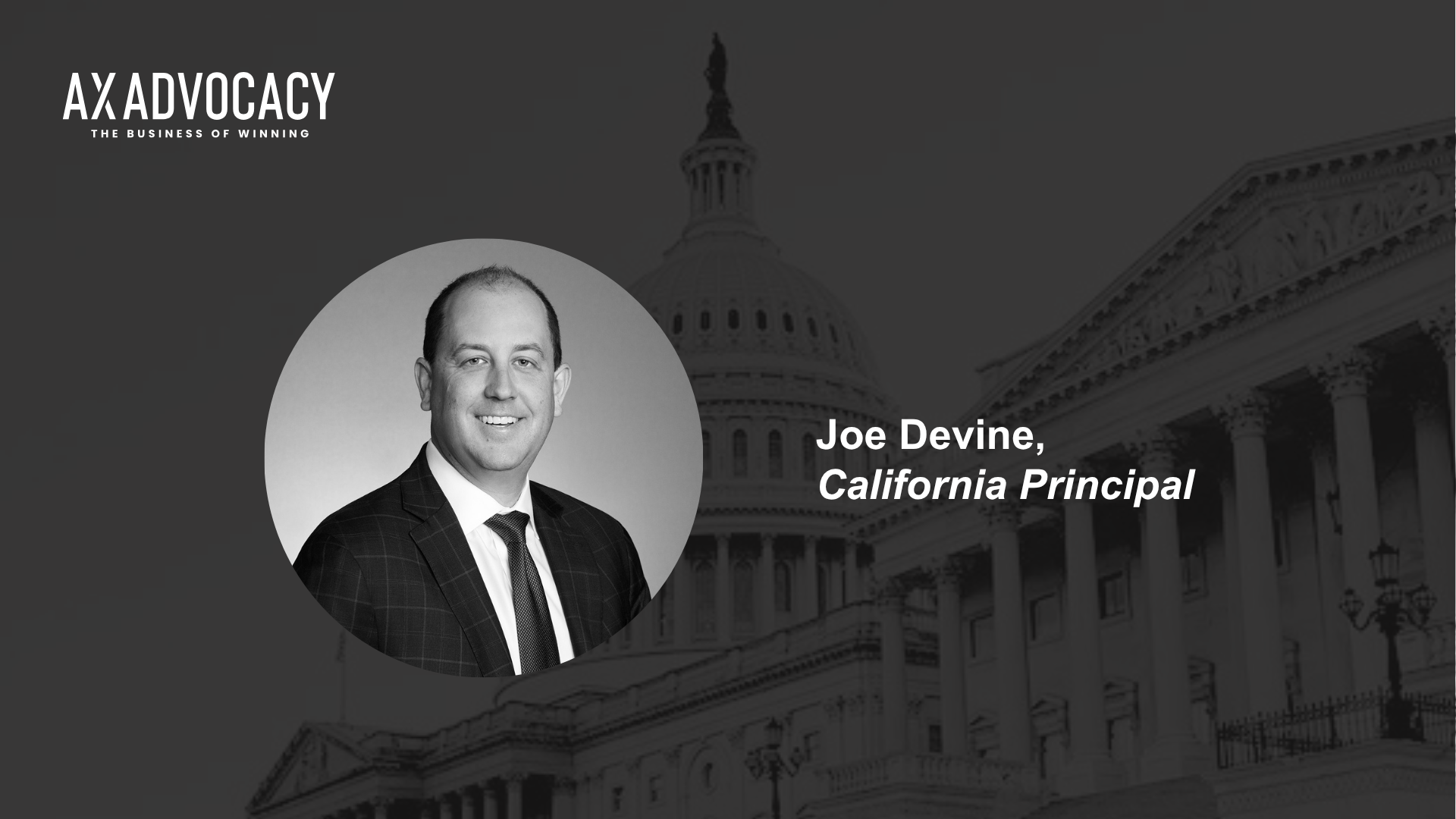
Firm significantly expands its presence in the nation's largest state economy, offering clients a fully integrated federal, state, local, and public affairs platform.
SNAPSHOT
