The DSA Surge: What Socialist Primary Wins Mean for Business and the Policy Landscape
The DSA Surge: What Socialist Primary Wins Mean for Business and the Policy Landscape
In the span of two election cycles, the Democratic Socialists of America have gone from insurgent outsiders to a genuine force inside the Democratic Party. A new analysis of DSA's national endorsement record shows 25 primary wins across 15 states so far in the 2025-2026 cycle, a 62 percent success rate stretching from New York city councils to congressional primaries in Pennsylvania and Colorado. The trend is accelerating, and its implications run well beyond the halls of Congress.
A Narrow Majority and a Familiar Problem
The most immediate political concern is what happens on Capitol Hill if Democrats win the House with a thin margin. Hakeem Jeffries would face the same arithmetic Kevin McCarthy encountered with the House Freedom Caucus: a small group of ideologically committed members can hold a majority hostage.
McCarthy was driven from the speakership in October 2023 by fewer than ten members. A larger DSA-aligned caucus, operating from the opposite end of the spectrum with fresh electoral mandates and no institutional loyalty to leadership, could prove equally disruptive. The Squad has already shown a willingness to break with Democratic leadership on appropriations, foreign policy, and procedural votes. More members with the same ideological profile and stronger grassroots backing would only amplify that dynamic.
The Bigger Story Is Not Congress
Congress gets the attention, but state legislatures and local governments set the conditions in which businesses actually operate. DSA candidates have won primaries in Georgia's state house, Minnesota's city councils, and city councils from New Jersey to Wisconsin to Arizona. These offices are pipelines. Today's Ithaca city councilmember is tomorrow's state legislator. The ideology rarely moderates as candidates advance.
DSA's tracker shows an overall candidate win rate just above 50 percent since 2016, but the trend line matters: their 2025 cycle rate hit 62 percent, among the highest in their history. They are getting better at targeting winnable races, recruiting credible candidates, and turning out their base in low-turnout primaries where a motivated minority can determine outcomes.
What It Means for Business in Blue States
DSA's platform is not a vague progressive wish list. It calls for high progressive taxation, aggressive labor mandates, rent control, restructuring or defunding police, and opposition to most market-rate development. In jurisdictions where DSA-backed officials hold real power, those positions have translated into tangible policy.
Minneapolis, where DSA holds several city council seats, has moved aggressively on landlord restrictions and business tax increases. San Francisco, where DSA-backed supervisor Dean Preston held power for years, saw some of the most restrictive commercial policies of any major American city before his 2024 defeat. Chicago's DSA aldermanic bloc has been a consistent source of opposition to development and public safety investment. These are not abstract ideological disputes. They represent direct compliance costs, operational risk, and a fundamentally less hospitable environment for investment.
The National Drag, the State-Level Threat
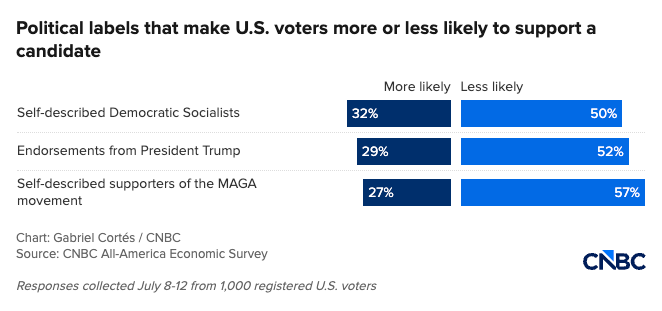
Nationally, a Democratic Party increasingly defined by its socialist wing faces real structural vulnerabilities. The 2024 results underscored how badly economic anxiety and perceptions of ideological overreach damage Democrats with working-class voters. An overtly socialist brand does not win back those voters. In competitive states and districts, it is a liability.
But DSA does not need to win nationally to reshape policy. In blue states, a narrow legislative majority is enough to pass sweeping changes to tax policy, labor law, zoning, and regulatory structure. The voters most affected by those policies often have no political recourse. They cannot flip the state, and moving is not always an option.
The Bottom Line
DSA's electoral growth is not a narrative. It is a documented trend with a consistent track record across eight years and nearly 300 tracked candidates. For business and advocacy organizations, the lesson is that down-ballot primaries are where the policy environment is actually determined. A city council race in Milwaukee or a state house primary in Georgia does not generate national headlines, but it shapes the regulatory and tax climate that affects daily operations.
Monitoring these races, engaging early, and understanding who holds office at every level of government matters more now than at any point in recent memory. The decisions being made in city council chambers today are the legislation being voted on in state capitals in five years.

Bob Salera
Principal of Communications