AxIndex, Edition 8


SNAPSHOT


Our Top 3:


1) Money Is Flooding the Map, But the Battlefield Is Narrowing
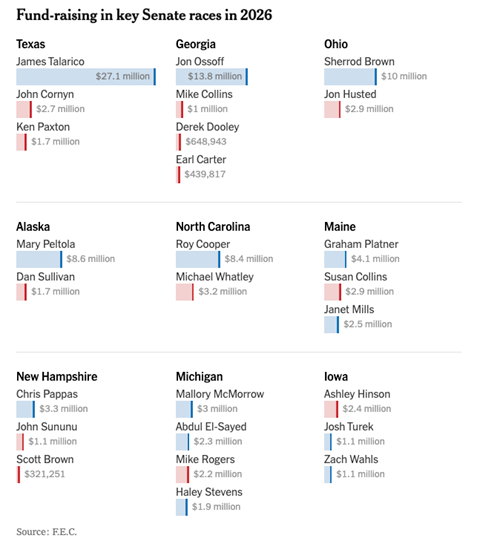
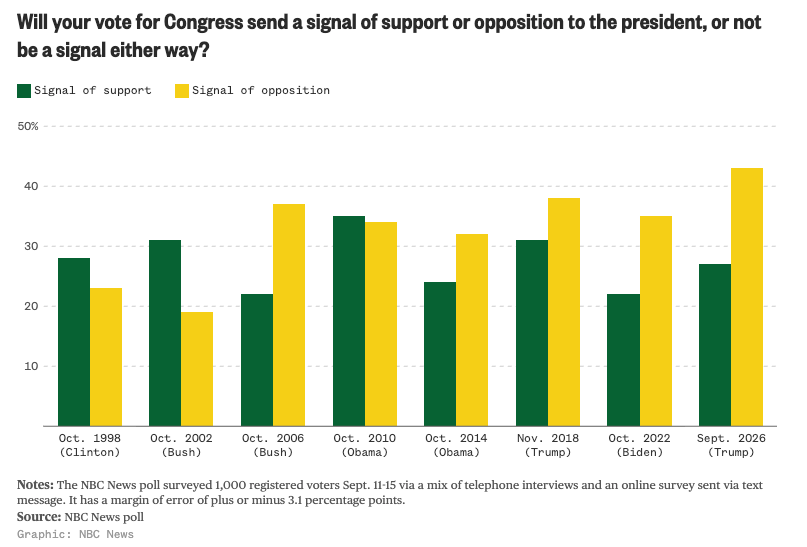
Q1 fundraising underscores a clear trend: both parties are entering the midterms with significant financial firepower, but Republicans maintain a structural advantage through outside groups and cash on hand. The NRCC posted a record-breaking quarter, while GOP-aligned super PACs are planning nearly $350 million to defend the Senate. At the same time, Democrats are often outraising Republicans at the candidate level in key battlegrounds. The result is a high-dollar cycle focused on a shrinking universe of truly competitive races, where outside spending and resource allocation will likely determine control.


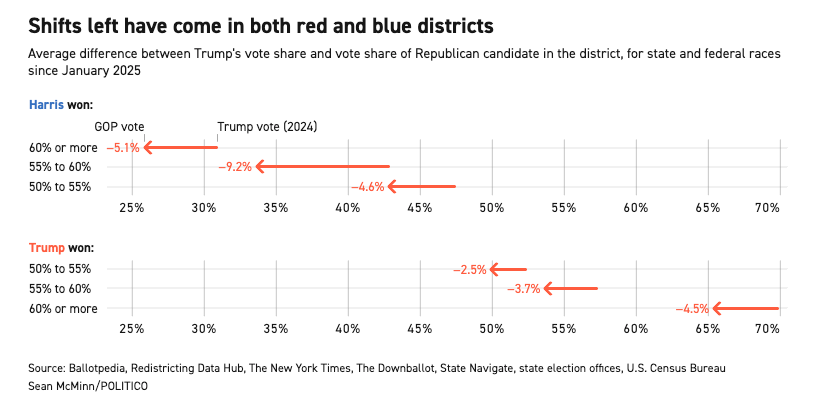
2) Democratic Overperformance Is Real, and the Map Is Starting to Respond
Democrats have overperformed 2024 benchmarks in roughly 85% of special elections since Trump took office, including flips in deep-red districts and a win in a Florida seat covering Mar-a-Lago. That momentum is beginning to show up in the broader landscape, with key Senate races shifting left and Republicans facing a more difficult national environment tied to Trump’s approval and economic concerns. While the path to a Senate majority remains narrow, the trajectory is improving for Democrats. The big question now is whether these early signals translate to higher-turnout midterm conditions.


3) Redistricting Wars Enter the Final Stretch 

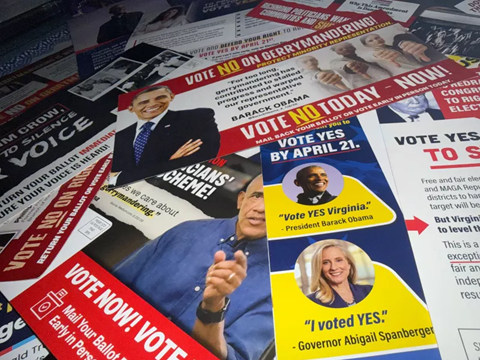
Virginia and Florida have emerged as the last major redistricting battlegrounds before the midterms, with both parties attempting aggressive mid-decade map changes to gain an edge. In Virginia, Democrats are pushing a referendum that could net up to four seats, backed by tens of millions in outside spending and high-profile surrogates, including ads featuring Obama. In Florida, Republicans are weighing new maps amid legal constraints and internal concerns about overreach. With limited time before filing deadlines and primaries, these late-stage map fights could meaningfully shape the House battlefield, and may be one of the last opportunities to structurally shift the map before November.


National Sentiment Tracking


Democratic Overperformance in Special Elections Signals Shifting Environment

A new analysis of 229 elections since President Donald Trump took office shows Democrats consistently outperforming their 2024 baseline, with candidates exceeding former Vice President Kamala Harris’ margins in roughly 85% of races. On average, Democrats are running about 5 points stronger, with some special elections swinging dramatically, even in districts Trump carried, suggesting broad-based movement rather than isolated gains.


While both parties caution that low-turnout special elections are an imperfect predictor of midterm outcomes, the trend mirrors past cycles where early overperformance foreshadowed major shifts. Democrats attribute gains to energized turnout and a focus on affordability issues, while Republicans argue the dynamics will change in higher-turnout elections. Still, the consistency across states and districts points to a political environment that has moved leftward since 2024, raising the stakes for both parties heading into 2026. Read More.

Support for Iran Strikes Stagnant as GOP Divides Deepen

Public opinion on the Iran conflict remains tepid, with just 35% of Americans approving of U.S. military strikes, a figure that has held steady over the past month. Separate polling shows only about a quarter of Americans believe the war has been worth the costs, reinforcing broader skepticism as the conflict drags on.


The data also highlights emerging fractures within the Republican coalition. Younger Republicans are significantly less supportive of the strikes than those over 45, adding to divides between MAGA and non-MAGA voters. With soft support, even within the GOP base, the issue could present messaging challenges as the midterms approach. Read More.

HOUSE HIGHLIGHTS

Polling At A Glance

House
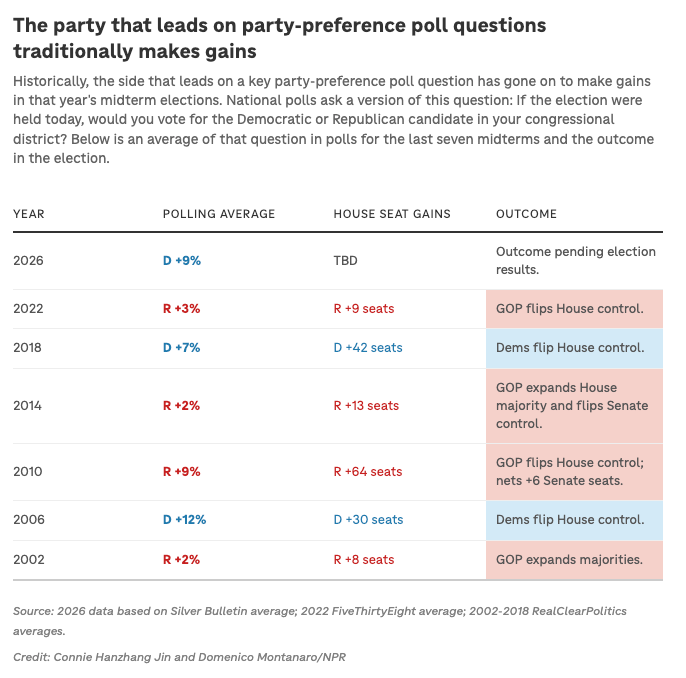
RCP Average Generic Ballot: 47.6 Dem - 41.6 GOP (D +6.0)
On this day in:

2022: 46.1 GOP - 42.5 Dem (R+3.6)

2018: 46.3 Dem - 38.8 GOP (D+7.5)

Retirements

For context, during the first Trump term, there were 52 retirements from the House. 

Swalwell, Gonzales Resign Ahead of Expulsion Votes

Reps. Eric Swalwell (D-Calif.) and Tony Gonzales (R-Texas) resigned from Congress just before the House was expected to move forward with expulsion votes over separate sexual misconduct scandals. Facing bipartisan pressure and looming ethics investigations, both lawmakers stepped down to avoid a rare and highly public removal process.


Their departures reflect a growing willingness from members of both parties to push for accountability, particularly in cases involving misconduct. At the same time, the episode underscores the challenges House leaders face in balancing due process, political realities, and maintaining a razor-thin majority, with additional ethics cases still pending. Read More.

Progressive Democrat Wins NJ Special Election, Reinforcing Party Momentum

Progressive activist Analilia Mejia defeated Republican Joe Hathaway 60–40 in a New Jersey special election, continuing a streak of Democratic overperformance heading into the 2026 midterms. The race, called minutes after polls closed, fills a seat vacated by Gov. Mikie Sherrill and keeps a once-competitive district firmly in Democratic hands.


Despite significant outside spending against her in the primary, Mejia's victory highlights both grassroots energy and shifting dynamics within the Democratic coalition. While Republicans downplayed the result given low turnout, the margin adds to a broader pattern of Democratic strength in special elections, offering another early signal of the political environment ahead of November. Read More.

House GOP Posts Record Fundraising as Both Parties Claim Momentum

House Republicans are touting a record-breaking $47.1 million first-quarter fundraising haul through the NRCC, narrowly outpacing Democrats and signaling strong donor engagement as they work to defend a slim majority. GOP leaders argue the numbers reflect confidence in their ability to withstand traditional midterm headwinds, with President Donald Trump playing a central role in energizing donors and campaign infrastructure.


Still, the broader picture remains competitive. Democrats are close behind in fundraising and point to strong candidate performance and overperformance in recent elections as evidence of their own momentum. With economic concerns continuing to dominate voter sentiment, both parties are entering the cycle well-funded and framing the midterms as a referendum on economic leadership, setting up a tightly contested fight for control of the House. Read More.

Redistricting

Virginia Redistricting Vote Marked by Confusion and Heavy Spending

Virginia’s high-stakes redistricting referendum heads to voters on April 21, but widespread confusion over ballot language, dueling ads, and competing campaign names is clouding the issue.


Both sides are accusing each other of misleading voters, while contradictory messaging, from TV spots to mailers, has made it difficult for many to understand what a “yes” or “no” vote actually means.


Behind the confusion is a flood of outside spending, with more than $60 million, largely from dark-money groups, powering the pro-redistricting campaign alone. The proposed map could shift multiple House seats toward Democrats, raising the national stakes. With turnout uncertain, analysts say the outcome may ultimately hinge less on persuasion and more on which side can better mobilize voters in the final days. Read More.

Florida Redistricting Session Delayed as Stakes and Scope Expand

Florida’s special session on redistricting has been delayed one week, with Gov. Ron DeSantis pushing it to April 28 while signaling he will take the lead on proposing new congressional maps. The delay adds uncertainty to one of the final major redistricting battlegrounds, where Republicans are considering mid-decade changes to help maintain control of the House.


DeSantis is also using the session to revive stalled priorities, including expanded vaccine exemptions and an “AI Bill of Rights,” broadening the scope beyond redistricting. The process is expected to face significant legal challenges, and the timing, combined with White House interest in reshaping maps, underscores the high political stakes heading into the 2026 midterms. Read More.

SENATE HIGHLIGHTS

Polling At A Glance

Recent Polls


Co/efficient (TX GOP Runoff): Cornyn (i) 44, Paxton (R) 43
Data for Progress (MI Dem Primary): Stevens 23, McMorrow 22, El-Sayed 22
Emerson (MI Dem Primary): McMorrow 24, El-Sayed 24, Stevens 13
Boston Globe/Suffolk (MA Dem Primary): Markey (i) 47, Moulton 30
High Point/YouGov (NC General): Cooper (D) 50, Whatley (R) 42


Cook Ratings

Likely D: MN (Open D)
Lean D: GA (Ossoff) NC (Open R), NH (Open D)
Tossup: ME (Collins - R), MI (Open - D), OH - Special (Husted)
Lean R: AK (Sullivan)
Likely R: IA (Open - R), NE (Ricketts), TX (Cornyn)


Retirements

So far, 11 Senators have announced their retirement from the chamber at the end of the current Congress.

Cook Shifts Senate Map Toward Democrats, But GOP Still Poised to Hold Slim Control

The Cook Political Report shifted four Senate races toward Democrats, citing a worsening national environment for Republicans, but still projects the GOP as the favorite to retain control of the chamber. Key moves include North Carolina and Georgia shifting to “Lean Democrat,” while Ohio moved to “Toss Up” and Nebraska to “Lean Republican,” signaling a more competitive map.


Despite the movement, structural advantages still favor Republicans, with Democrats needing four seats to win a majority and facing challenging races and primary divisions in several states. Analysts point to President Donald Trump’s declining approval ratings and issues such as the war in Iran and rising costs as headwinds for the GOP, but note that the outlook could shift depending on political and economic conditions in the months ahead. Read More.


Democrats Lead Candidate Fundraising as GOP Leans on Outside Money

Democratic candidates are outraising their Republican counterparts across nearly every major Senate battleground, including significant advantages in states like Texas, Georgia, and Ohio. High-profile races show wide gaps, with candidates like James Talarico, Jon Ossoff, and Sherrod Brown bringing in substantially more through their campaign committees.


However, Republicans are offsetting that disadvantage with a strong edge in outside spending, as GOP-aligned super PACs and donor networks pour millions into key races. The split highlights a defining dynamic of the 2026 cycle: Democrats are building strength at the candidate level, while Republicans rely on well-funded outside groups to defend their majority in a competitive map. Read More.


MAHA Movement Faces Early Test in Louisiana Senate Race

The “Make America Healthy Again” (MAHA) movement is getting its first real electoral test in Louisiana’s Senate primary, but early signs suggest limited impact. Despite endorsing Rep. Julia Letlow and pledging support, MAHA-affiliated groups have spent relatively little and failed to consolidate backing, while the race remains dominated by traditional GOP dynamics, particularly loyalty to Donald Trump and cost-of-living concerns.


The fragmented approach and modest resources raise questions about MAHA’s ability to translate its grassroots energy into political influence ahead of the midterms. While the movement has ambitions to shape races nationally, its uneven presence in Louisiana suggests it may remain more aligned with Trump’s coalition than a standalone force. Read More.

IN THE STATES

States Push Back as Data Center Boom Sparks Midterm Tensions

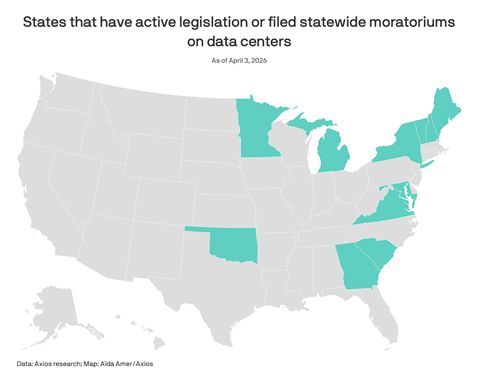
Data center expansion is quickly becoming a state-level political flashpoint, with at least 11 states introducing legislation to restrict or halt development amid growing concerns over power usage, water strain, and local infrastructure. Maine is on track to become the first state to impose a temporary ban, while others are exploring limits tied to environmental impact, energy costs, and consumer protections, signaling a broader wave of state-led action in the absence of federal policy. 


The issue is cutting across party lines, forcing governors and state lawmakers to balance economic growth and AI investment against rising constituent backlash. With proposals ranging from outright moratoriums to tighter regulations, how states respond could shape not only local economies but also national political narratives around energy, affordability, and technological expansion heading into 2026. Read More.

EMERGING NARRATIVES

The Check-Writers: Self-Funders Flood 2026 Congressional Races

Wealthy candidates are betting their own fortunes on congressional seats across the country in 2026. In Maryland's 6th District, David Trone, co-founder of Total Wine & More and one of the biggest self-funders in congressional history, has already poured more than $10 million into a primary challenge against the incumbent he personally endorsed to succeed him (read more). In San Francisco, former AOC chief of staff Saikat Chakrabarti has self-funded nearly $5 million chasing Nancy Pelosi's open seat while raising just $61,000 from actual donors so far this year (read more). Three Democrats in New Jersey’s competitive 7th District primary enter the final stretch with similar cash on hand, but only Rebecca Bennett built her war chest entirely from donor fundraising, while her opponents rely heavily on self-funding (read more).

The pattern reflects a broader trend that has reshaped congressional campaigns for years. Self-funding candidates cashed in millions to their own races in recent cycles, and 2026 is on pace to continue that momentum. But the track record is uneven at best. Just look at David Trone; he spent over $60 million in the 2024 Maryland Senate primary and lost by 11 points. Money buys airtime. It doesn't always buy votes.

ON THE HORIZON

Upcoming Elections:


April 21:
Virginia Redistricting Amendment


May 5:
Indiana Primary
Ohio Primary


May 12:
Nebraska Primary
West Virginia Primary
North Carolina Runoff


May 16:
Louisiana Primary


May 19:
Alabama Primary
Georgia Primary
Idaho Primary
Kentucky Primary
Oregon Primary
Pennsylvania Primary


April 14, 2026
Seasoned Arkansas Policy Leader Mischa Martin Named Arkansas Principal
April 9, 2026
AxAdvocacy President Ashlee Rich Stephenson joined SiriusXM POTUS to discuss affordability.  “We have to get back to the issues of pricing and affordability,” Ashlee said. “The onus is on Republicans to remind voters that there’s a reason why President Trump won the Electoral College and the popular vote.”Under President Biden, Americans experienced the highest inflation in more than 40 years, and families are still feeling it every day. Voters can easily point fingers, but solving affordability is harder. Heading into the midterms, the question is simple: who has the actual solutions to lower prices and cool inflation? Watch the full interview:
April 8, 2026
SNAPSHOT
March 26, 2026
SNAPSHOT
March 12, 2026
SNAPSHOT
March 11, 2026
AxAdvocacy–Ipsos Survey Highlights Public Views on AI, Data Centers, Corporate Mergers, and Domestic Manufacturing